
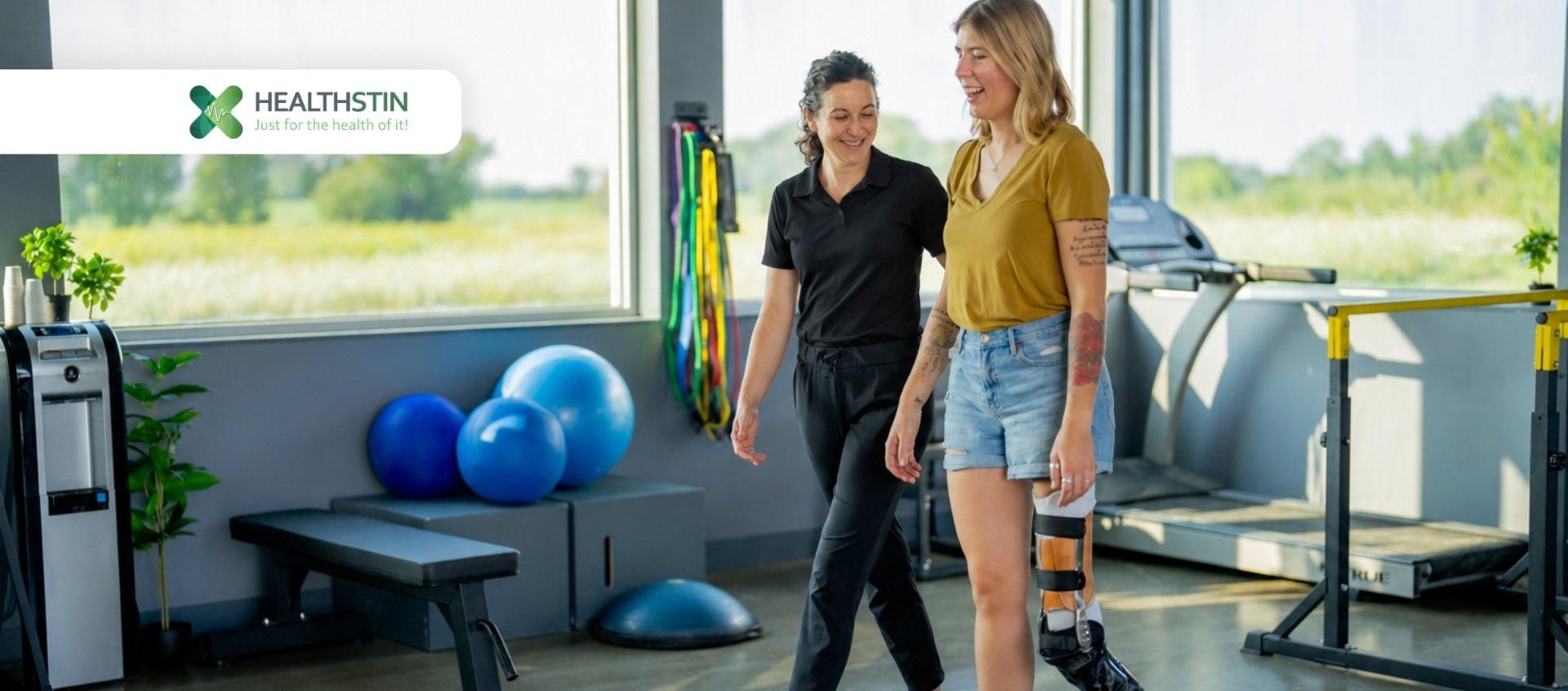
Learning to walk with a prosthetic limb is not about reaching one big milestone. Instead, it involves many small steps, like standing evenly, shifting your weight, taking your first confident step outside, and then handling kerbs, wet floors, and uneven footpaths.
For NDIS participants with limb loss, progress often relies more on steady, well-planned practice than on any single treatment. It helps to have a clinician who understands both the prosthesis and the person using it.
Limb loss is more common in Australia than many people think. The Australian Institute of Health and Welfare reported about 7,000 lower limb amputations among people with type 2 diabetes in 2023–24. Trauma, vascular disease, and cancer cause even more cases. Structured exercise physiology can support rehabilitation after amputation, working with your prosthetist and care team.
What Prosthetic Gait Training Involves
Gait training after amputation focuses on how you move, not just how far. An Accredited Exercise Physiologist will check your walking pattern, strength, and confidence, then create a programme based on your needs.
- Amputee exercise physiology can focus on different areas, depending on what you want to achieve.
- Weight-bearing and weight-shifting practice through the prosthetic limb
- Strength exercises for the hips, core, and residual limb to help walk more evenly
- Functional balance exercises on both steady and unsteady surfaces
- Practice step size, walking speed, and turning to walk more smoothly with a prosthetic
- Building stamina to walk longer distances and go out in the community
- Practising walking on stairs, ramps, and outdoor paths
Why Balance Training Deserves Equal Attention
Balance is often what holds people back. Research in Physical Therapy found that more than half of lower limb prosthesis users have fallen in the past year. Even the fear of falling can limit someone’s activities before a fall ever happens.
The evidence for exercise in this area is promising, though not certain. A 2024 systematic review in Archives of Physical Medicine and Rehabilitation found moderate confidence that 1 to 3 sessions of 20 to 60 minutes of exercise per week can improve balance, walking speed, walking endurance, and transfer ability in adults with lower limb amputation, using programmes that combine aerobic exercise with strengthening or balance work. Results vary for each person, and real progress takes months of steady effort.
A Coordinated Team Around Each Participant
Prosthetic mobility support is most effective when everyone works together. At Healthstin Melton, exercise physiology is offered alongside physiotherapy, Hydrotherapy, and remedial massage therapy. Our clinicians share the same goals and work together. We also work with your prosthetist, who is responsible for prosthetic prescription, fitting, and adjustment.
For support coordinators and referring allied health professionals, this means having clear baseline measures, written goals, and progress documentation that you can use during plan reviews.
If you are considering your options, either for yourself or for a participant, NDIS participants can book a free 30-minute consultation to discuss goals and funding. You can also call 1300 090 931 to speak with our Melton team.
Choosing Amputee Support Services in Melton
If you are looking at amputee rehab options in Melton, here are a few questions to consider:
- Do the exercise physiologists hold Accredited Exercise Physiologist status?
- Do they have experience with lower limb amputee therapy and prosthetic users?
- Will they liaise with your prosthetist, physiotherapist and support coordinator?
- Are programmes reviewed as your prosthetic use and goals change?
- Is there access to a gym, pool and clinic space, plus home visits when travel is hard?
Practical access is just as important as clinical skill. Our Melton clinic provides a gym, a Hydrotherapy pool, clinic-based sessions, and home visits throughout the local area.
NDIS amputee rehabilitation takes time, and there are no shortcuts. Regular, focused gait and balance training, coordinated with your team, usually leads to the best progress over time.
Ready to begin? You can book an appointment online or fill out our referral form, and our Melton team will contact you.
